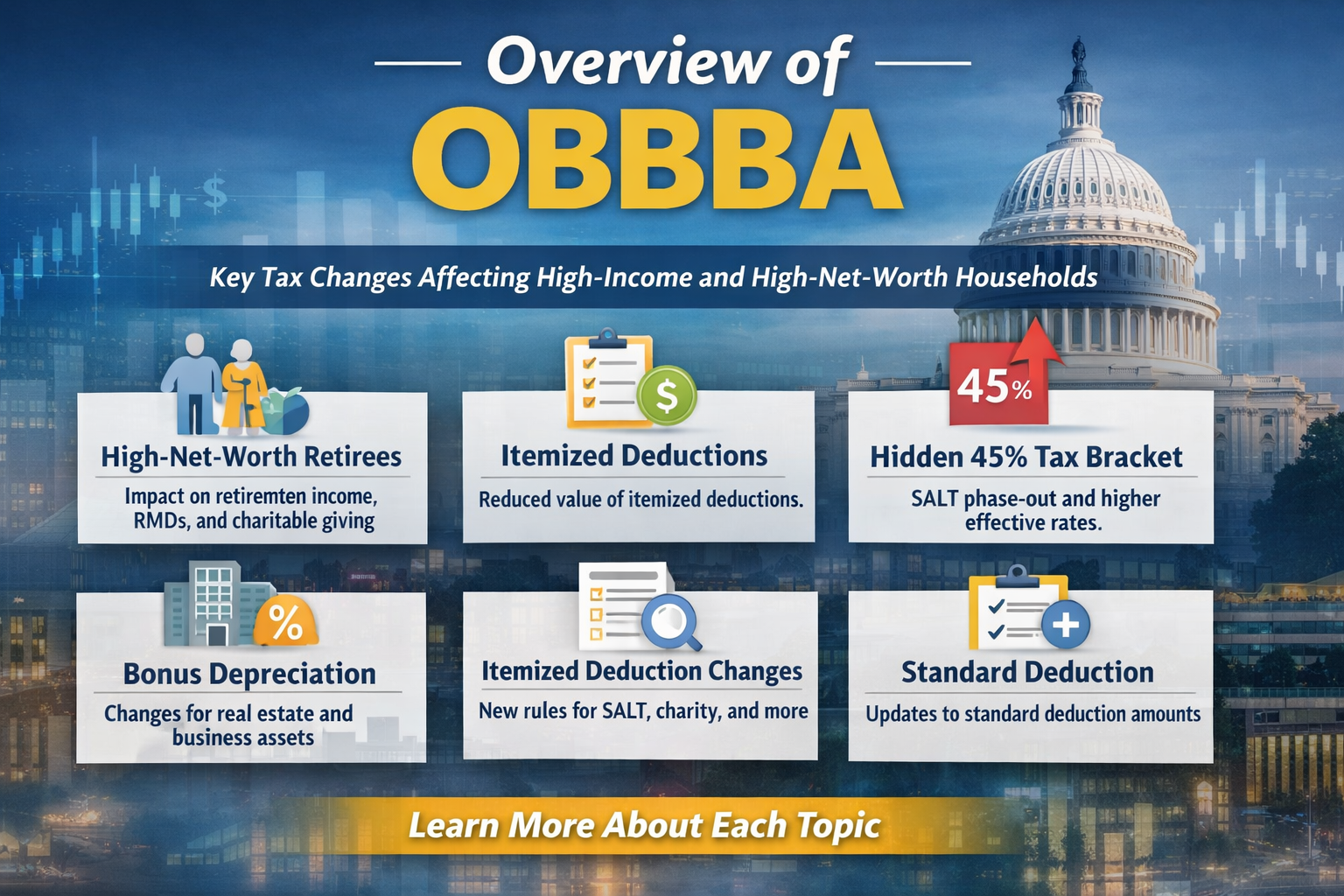
The OBBBA tax bill introduced multiple changes that affect high-income and high-net-worth households. While many of the headlines focused on a few specific provisions, the real impact of the bill depends on how its pieces interact with your income, deductions, and planning decisions.
We see again and again that the biggest opportunities for improving a client’s tax outcome come from timing, coordination, and intentional decisions throughout the year
If you’re retired with roughly $5 million or more in net worth and $300,000+ of annual income, taxes still play a meaningful role in cash flow, flexibility, and long-term planning. The recent OBBBA tax bill doesn’t fundamentally change the tax system, but it does adjust incentives in ways that matter for retirees at this level.
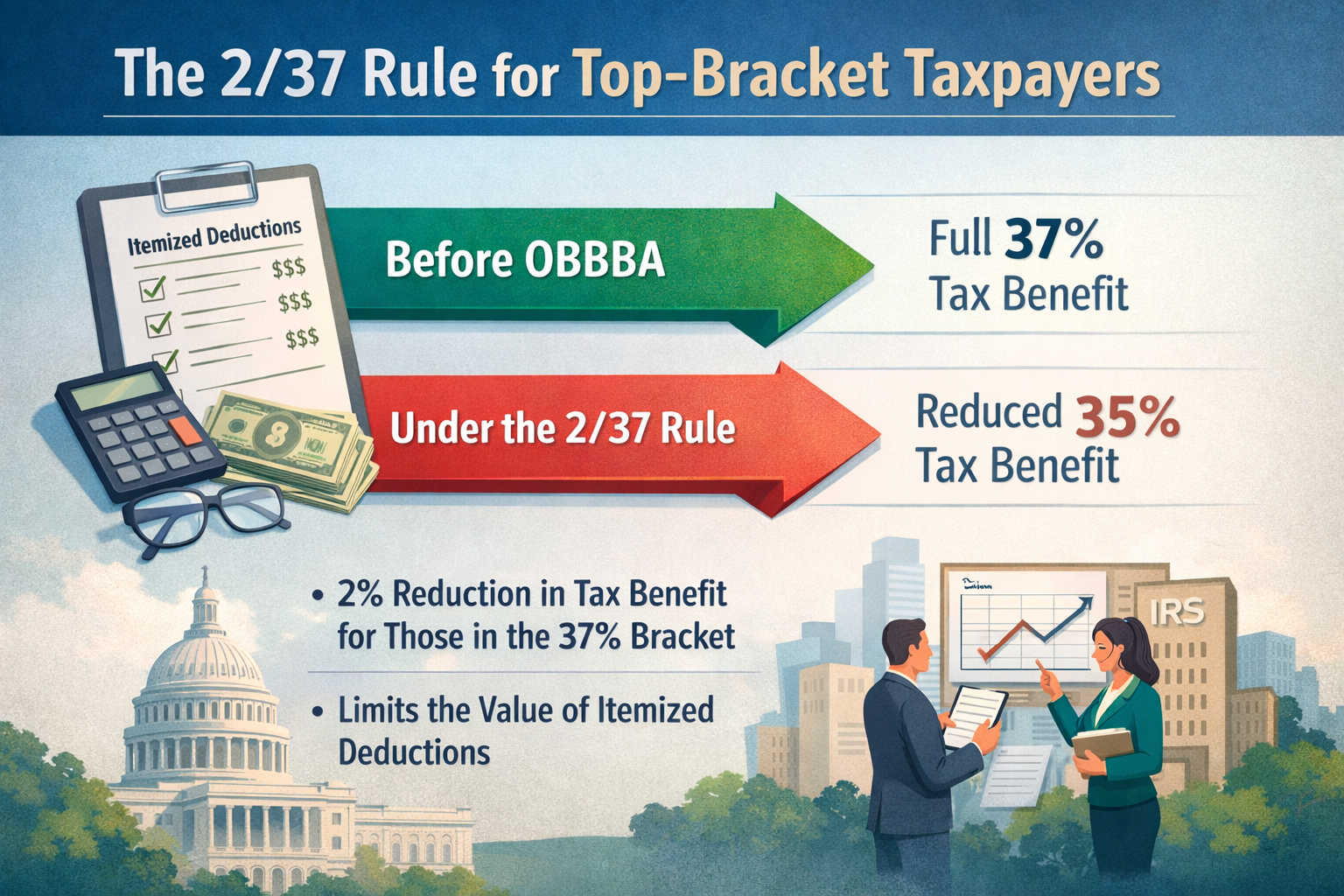
Under the recently enacted One Big Beautiful Bill Act, a new limitation applies to itemized deductions for taxpayers in the top marginal tax bracket. This provision doesn’t eliminate deductions outright, but it does reduce their tax value in a way that can meaningfully affect high-income households.
To minimize the impact of the "SALT Torpedo" high income earners should analyze the attractiveness of deferred income plans, pre-tax 401(k) contributions over Roth 401(k) contributions, and charitable bunching of donations.
Bonus depreciation is back! Our article touches on the OBBBA restoration of bonus depreciation, what qualifies, and how investors can use it to save on taxes and improve cash flow.
Some of the largest changes to the tax code made by the One Big Beautiful Bill Act applied to itemized deductions for tax filers.