
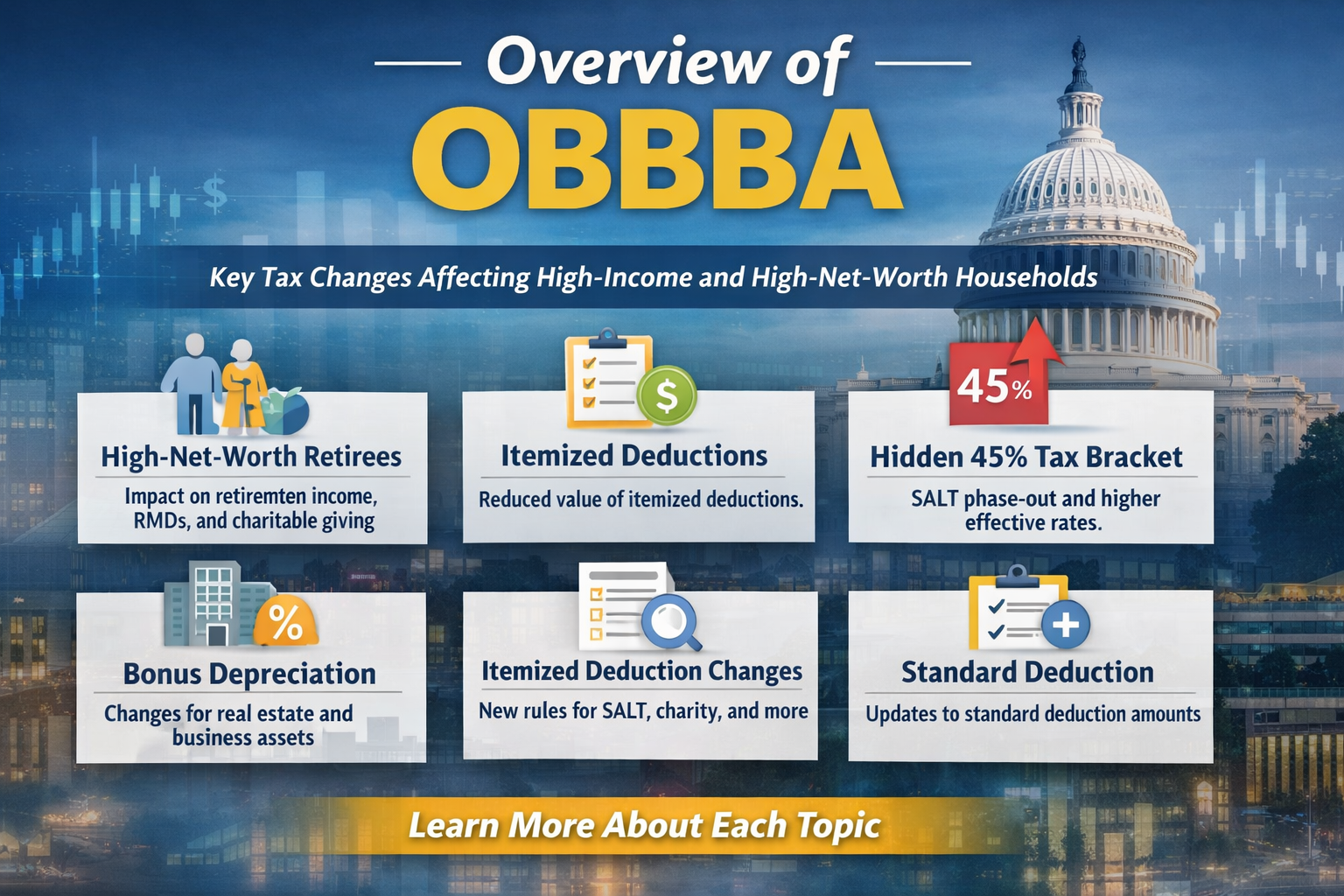
Introduction to OBBBA Blog Series
The OBBBA tax bill introduced multiple changes that affect high-income and high-net-worth households. While many of the headlines focused on a few specific provisions, the real impact of the bill depends on how its pieces interact with your income, deductions, and planning decisions.
Rather than covering everything in one long article, we broke the law into focused, digestible posts that each address a specific area of the tax code. This article serves as a starting point, with brief introductions to each post in the series.
You don’t need to read everything. Start with the topics that apply most directly to your situation.
What Does OBBBA Mean for High-Net-Worth Retirees?
This post is written for retirees, near-retirees, and households with multiple income sources such as Social Security, required minimum distributions, portfolio income, and real estate.
It focuses on how the OBBBA affects marginal tax rates, income phase-outs, and charitable planning decisions, all of which tend to matter more in retirement than during peak earning years. Retirees are uniquely exposed to these changes because relatively small increases in income can trigger higher effective tax rates or reduce the value of deductions.
Read the full post here: https://deltawealthadvisors.com/blog/obbba-breakdown-what-high-net-worth-retirees-need-to-know-about-the-obbba-tax-bill
How Does OBBBA Change Itemized Deductions?
This post walks through the full range of changes, including SALT deductions, charitable contributions, and mortgage insurance, and explains how these rules fit together. This is the right place to start if you want detail rather than headlines.
Read the full post here: https://deltawealthadvisors.com/blog/obbba-breakdown-itemized-deductions
What Do High-Income Taxpayers Need to Know About OBBBA's Itemized Deductions?
While itemized deductions still exist under the OBBBA, their tax value has changed for higher-income households. This article introduces how new limitations affect the benefit of deductions at higher tax brackets, including the concept commonly referred to as the “2/37” limitation.
Read the full post here: https://deltawealthadvisors.com/blog/obbba-breakdown-what-high-income-taxpayers-need-to-know-about-itemized-deductions
What Changes Were Made to the Standard Deduction Under OBBBA?
This post focuses on how the OBBBA changed the standard deduction and why those changes matter even for high-income households.
It explains how the standard deduction interacts with itemized deductions and why the choice between the two is no longer as straightforward as it once was. Many planning decisions under the OBBBA build on this foundation.
Read the full post here: https://deltawealthadvisors.com/blog/obbba-breakdown-changes-to-standard-deduction
How are High-Income Earners Paying a Hidden 45% Tax Bracket?
Although the SALT deduction cap increased, it now phases out as income rises. Within that phase-out range, taxpayers can face significantly higher effective marginal tax rates than the statutory brackets suggest. This matters most for income timing decisions, such as bonuses, Roth conversions, and business income recognition.
Read the full post here: https://deltawealthadvisors.com/blog/obbba-breakdown-the-hidden-45-tax-bracket
Bonus Depreciation Under OBBBA
The OBBBA brought back bonus depreciation, allowing certain assets to be written off more quickly. While this can improve short-term cash flow, it also introduces tradeoffs that affect future taxes and exit planning. This article explains what changed and why bonus depreciation isn’t automatically good or bad.
Read the full post here: https://deltawealthadvisors.com/blog/obbba-breakdown-bonus-depreciation-explained
As always, the right interpretation of these rules depends on how they apply to your specific situation. Please be sure to subscribe to our monthly newsletter to be informed.